Author: Ronald Surfield

  • M101

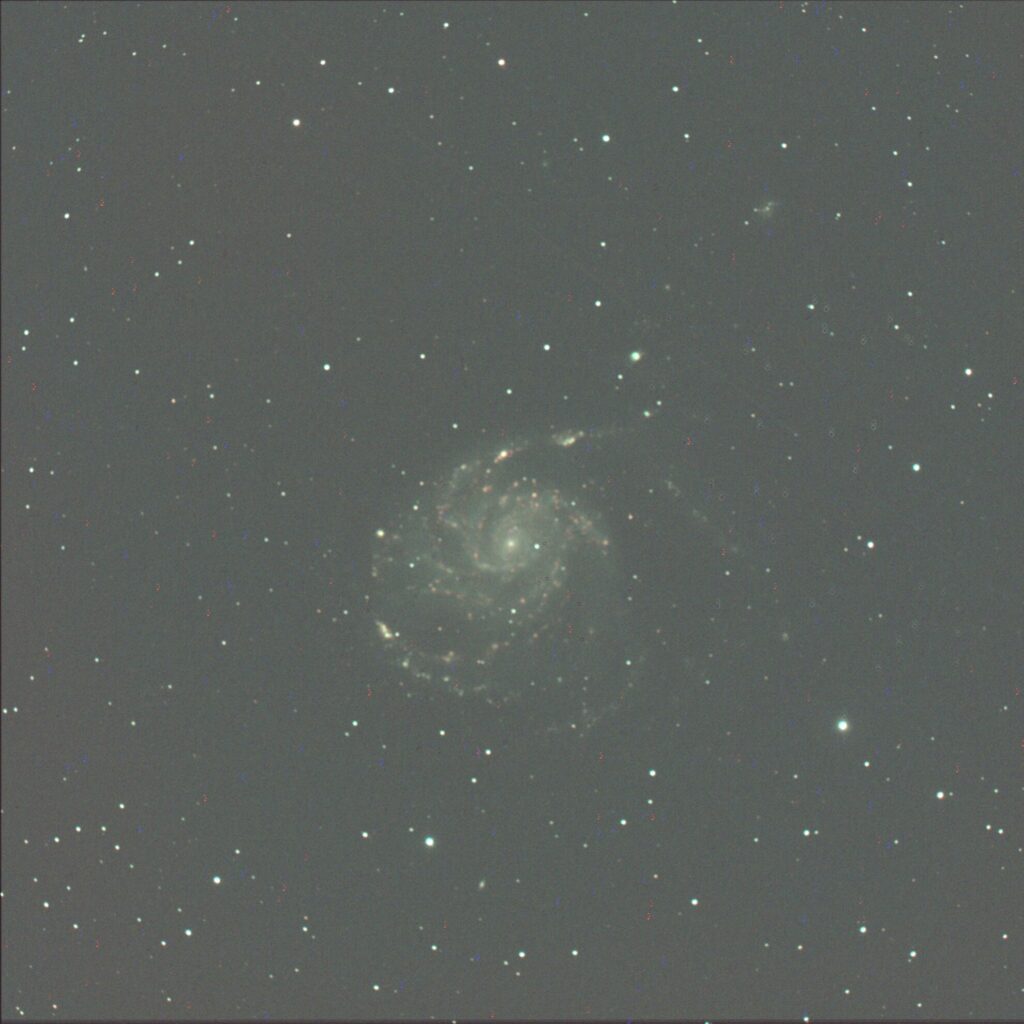
    M101 Spiral Galaxy in Ursa Major

    The Pinwheel Galaxy (also known as Messier 101M101 or NGC 5457) is a face-on, counterclockwise intermediate spiral galaxy located 21 million light-years (6.4 megaparsecs) from Earth in the constellation Ursa Major. It was discovered by Pierre Méchain in 1781 and was communicated that year to Charles Messier, who verified its position for inclusion in the Messier Catalogue as one of its final entries.

    On February 28, 2006, NASA and the European Space Agency released a very detailed image of the Pinwheel Galaxy, which was the largest and most detailed image of a galaxy by Hubble Space Telescope at the time. The image was composed of 51 individual exposures, plus some extra ground-based photos

  • M98

    M98

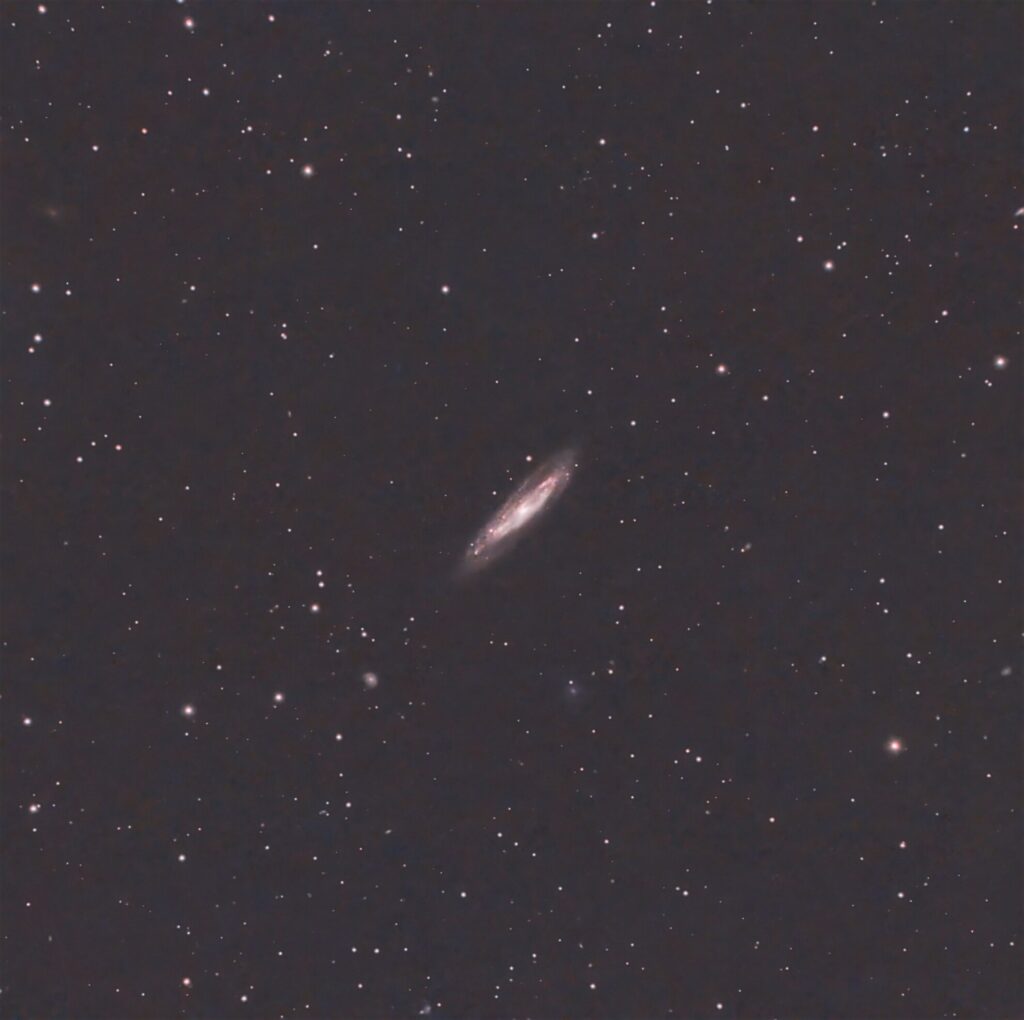
    Messier 98M98 or NGC 4192, is an intermediate spiral galaxy about 44.4 million light-years away in slightly northerly Coma Berenices, about 6° to the east of the bright star Denebola (Beta Leonis). It was discovered by French astronomer Pierre Méchain on 1781, along with nearby M99 and M100, and was catalogued by compatriot Charles Messier 29 days later in his Catalogue des Nébuleuses & des amas d’Étoiles. It has a blueshift, denoting ignoring of its fast other movement (vectors of proper motion), it is approaching at about 140 km/s.

    The morphological classification of this galaxy is SAB(s)ab, which indicates it is a spiral galaxy that displays mixed barred and non-barred features with intermediate to tightly wound arms and no ring. It is highly inclined to the line of sight at an angle of 74° and has a maximum rotation velocity of 236 km/s. The combined mass of the stars in this galaxy is an estimated 76 billion (7.6 × 10¹⁰) times the mass of the Sun. It contains about 4.3 billion solar masses of neutral hydrogen and 85 million solar masses in dust. The nucleus is active, displaying characteristics of a “transition” type object. That is, it shows properties of a LINER-type galaxy intermixed with an H II region around the nucleus.

    Messier 98 is a member of the Virgo Cluster, which is a large cluster of galaxies, part of the local supercluster.

  • M81

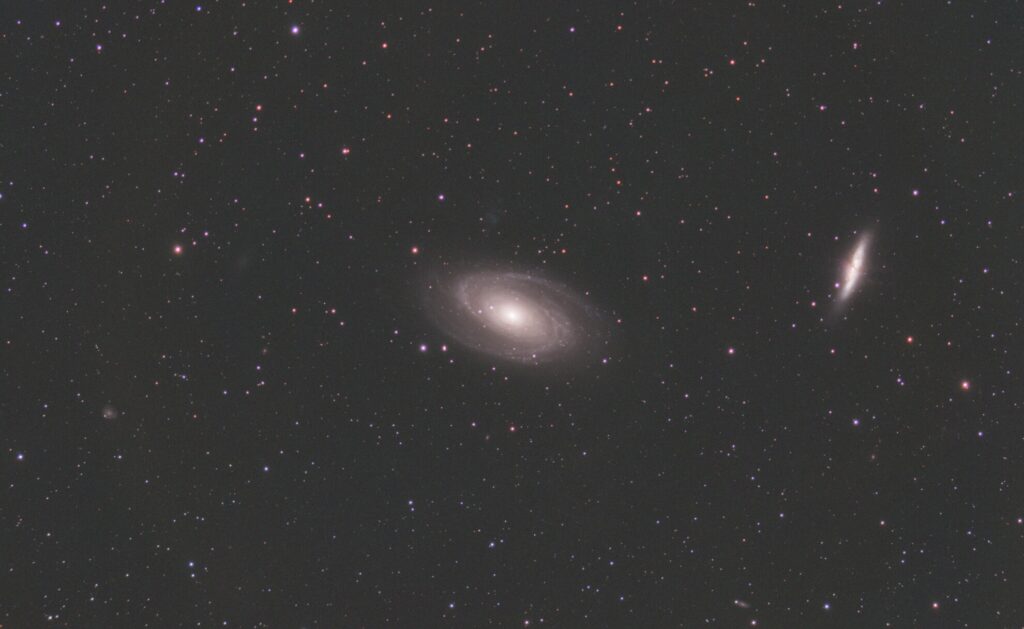
    Messier 81 (also known as NGC 3031 or Bode’s Galaxy) is a grand design spiral galaxy about 12 million light-years away in the constellation Ursa Major. It has a D25 isophotal diameter of 29.44 kiloparsecs (96,000 light-years).

    Because of its relative proximity to the Milky Way galaxy, large size, and active galactic nucleus (which harbors a 70 million M supermassive black hole), Messier 81 has been studied extensively by professional astronomers. The galaxy’s large size and relatively high brightness also makes it a popular target for amateur astronomers. In late February 2022, astronomers reported that M81 may be the source of FRB 20200120E, a repeating fast radio burst.

  • M64

    M64

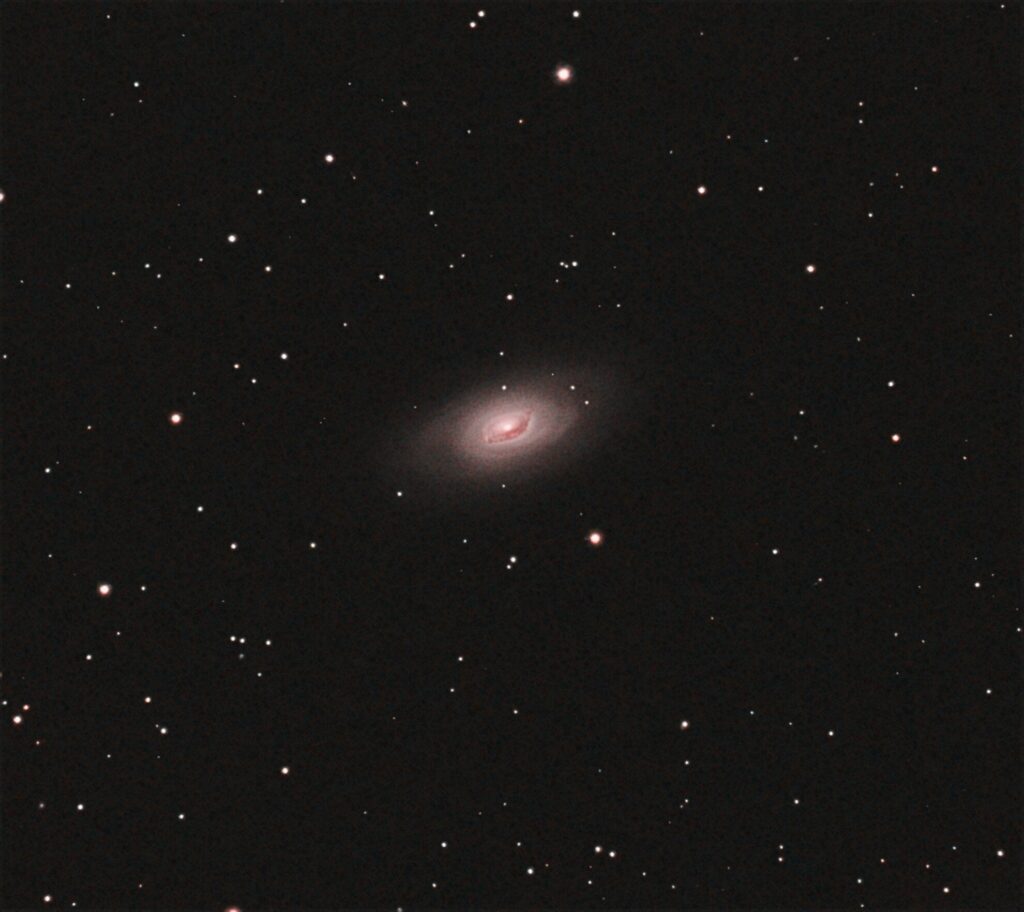
    The Black Eye Galaxy (also called Sleeping Beauty Galaxy or Evil Eye Galaxy and designated Messier 64M64, or NGC 4826) is a relatively isolated spiral galaxy 17 million light-years away in the mildly northern constellation of Coma Berenices. It was discovered by Edward Pigott in March 1779, and independently by Johann Elert Bode the following month, as well as by Charles Messier the next year. A dark band of absorbing dust partially in front of its bright nucleus gave rise to its nicknames of the “Black Eye”, “Evil Eye”, or “Sleeping Beauty” galaxy. M64 is well known among amateur astronomers due to its form in small telescopes and visibility across inhabited latitudes.

    This galaxy is inclined 60° to the line-of-sight and has a position angle of 112°. At the distance of this galaxy, it has a linear scale of 65 ly (20 pc) per arcsecond. The morphological classification in the De Vaucouleurs system is (R)SA(rs)ab, where the ‘(R)’ indicates an outer ring-like structure, ‘SA’ denotes a non-barred spiral, ‘(rs)’ means a transitional inner ring/spiral structure, and ‘ab’ says the spiral arms are fairly tightly wound. Ann et al. (2015) gave it a class of SABa, suggesting a weakly barred spiral galaxy with tightly wound arms.

    M64 is a type 2 Seyfert galaxy with an HII/LINER nucleus. The central region is a weak source of radio emission. A soft X-ray source has been detected at the nucleus, which is most likely coming from the circumnuclear region rather than directly from an active galactic nucleus. There is an inner disk of molecular gas that is truncated at a radius of 2,300 ly (700 pc). At present, the non-rotational motions of this disk do not significantly feed the core, but the disk does produce a vigorous rate of star formation, with also approximately 100 billion stars inside the galaxy. There is also evidence of a recent large inflow of mass. The central supermassive black hole is calculated to have a mass of about 8.4×10⁶ M.

  • M63

    M63

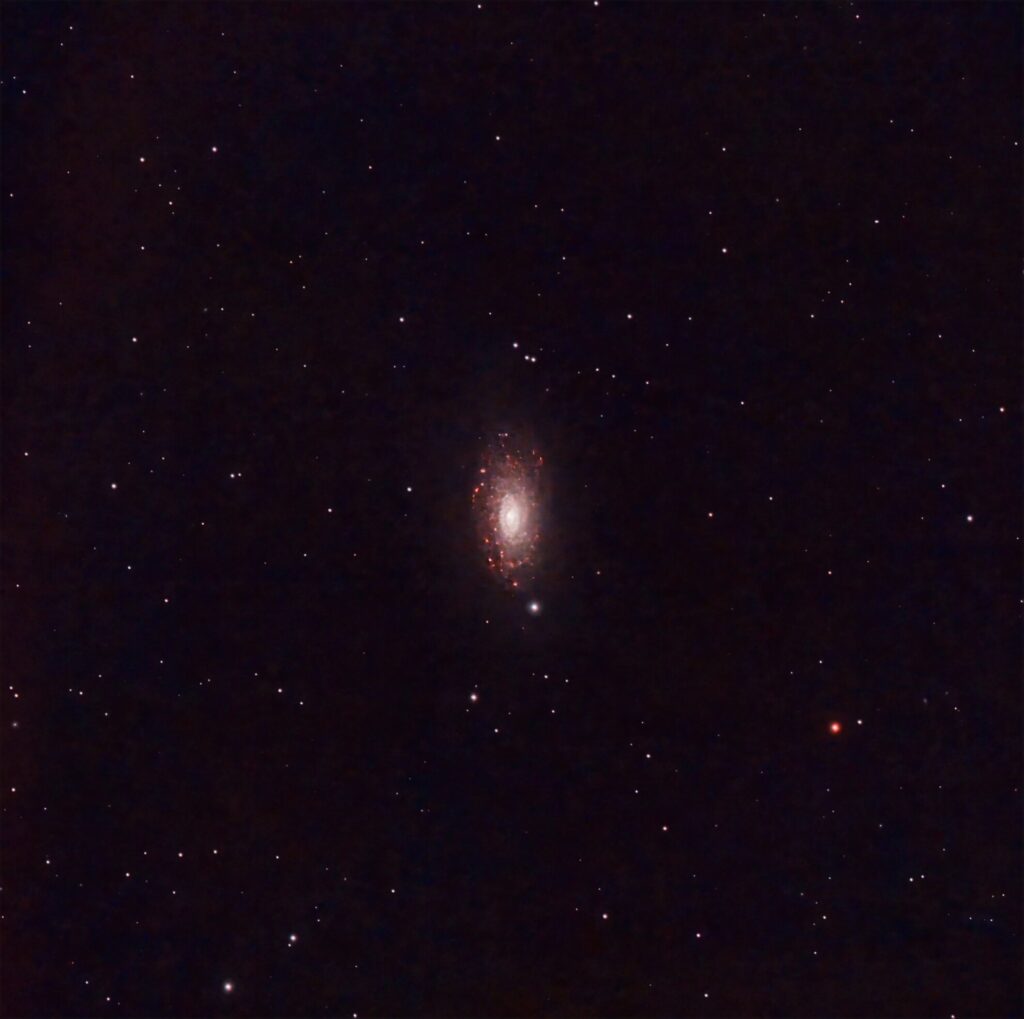
    Messier 63 or M63, also known as NGC 5055 or the seldom-used Sunflower Galaxy, is a spiral galaxy in the northern constellation of Canes Venatici with approximately 400 billion stars. M63 was first discovered by the French astronomer Pierre Méchain, then later verified by his colleague Charles Messier on 14 June 1779. The galaxy became listed as object 63 in the Messier Catalogue. In the mid-19th century, Anglo-Irish astronomer Lord Rosse identified spiral structures within the galaxy, making this one of the first galaxies in which such structure was identified.

    The shape or morphology of this galaxy has a classification of SAbc, indicating a spiral form with no central bar feature (SA) and moderate to loosely wound arms (bc). There is a general lack of large-scale continuous spiral structure in visible light, so it is considered a flocculent galaxy. However, when observed in the near infrared, a symmetric, two-arm structure is seen. Each arm wraps 150° around the galaxy and extends out to 13,000 light-years (4,000 parsecs) from the nucleus.

  • M51

    M51 Whirlpool Galaxy -C8

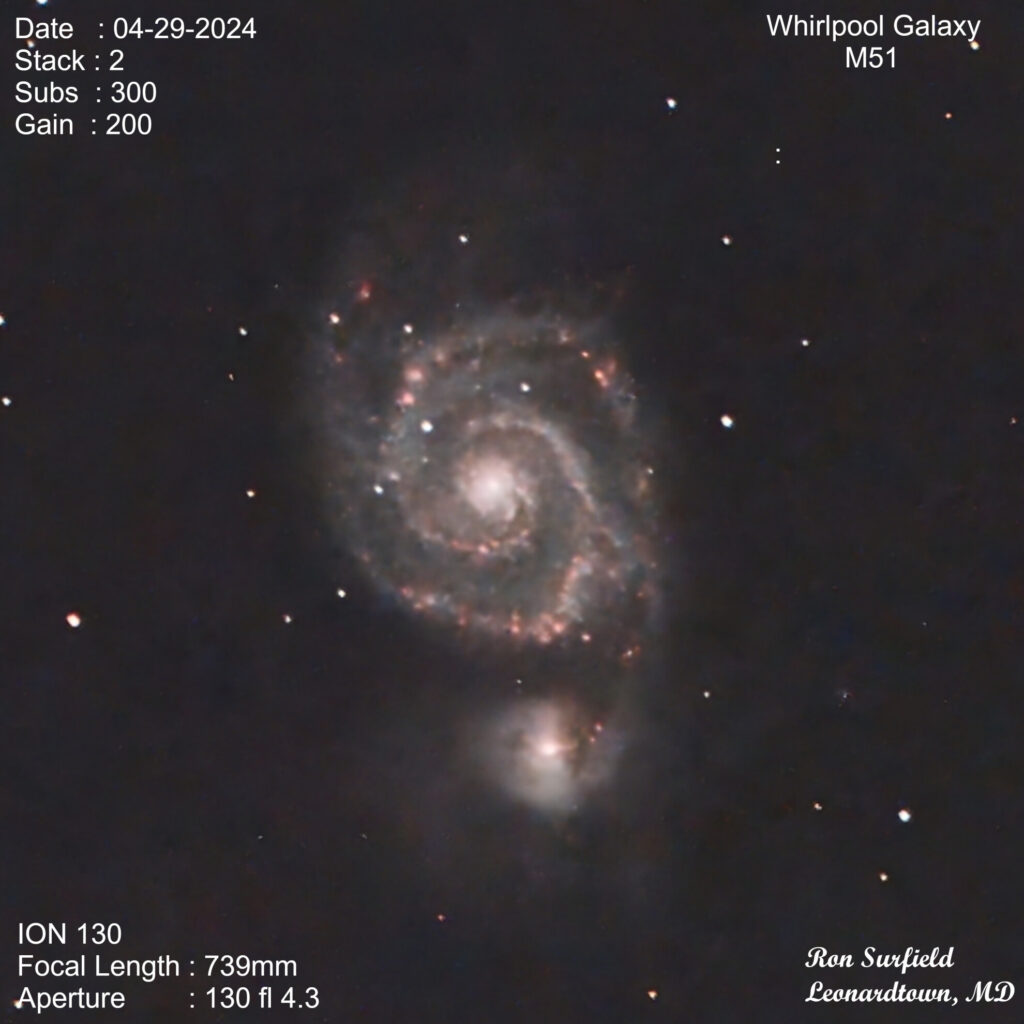
    The Whirlpool Galaxy lies at a distance of 23 to 31 million light-years from Earth. Based on the 1991 measurement by the Third Reference Catalogue of Bright Galaxies using the D25 isophote at the B-band, the Whirlpool Galaxy has a diameter of 23.58 kiloparsecs (76,900 light-years). Overall, the galaxy is about 88% the size of the Milky Way.[19][20][21] Its mass is estimated to be 160 billion solar masses, or around 10.3% of the mass of Milky Way Galaxy.[citation needed] It’s believed to be an estimated 400 million years old.

    black hole, once thought to be surrounded by a ring of dust, but now believed to be partially occluded by dust instead, exists at the heart of the spiral. A pair of ionization cones extend from the active galactic nucleus.

    Spiral structure

    The Whirlpool Galaxy has two, very prominent spiral arms that wind clockwise. One arm deviates from a constant angle significantly. The pronounced spiral structure of the Whirlpool Galaxy is believed to be the result of the close interaction between it and its companion galaxy NGC 5195, which may have passed through the main disk of M51 about 500 to 600 million years ago. In this proposed scenario, NGC 5195 came from behind M51 through the disk towards the observer and made another disk crossing as recently as 50 to 100 million years ago until it is where we observe it to be now, slightly behind M51.

  • M42

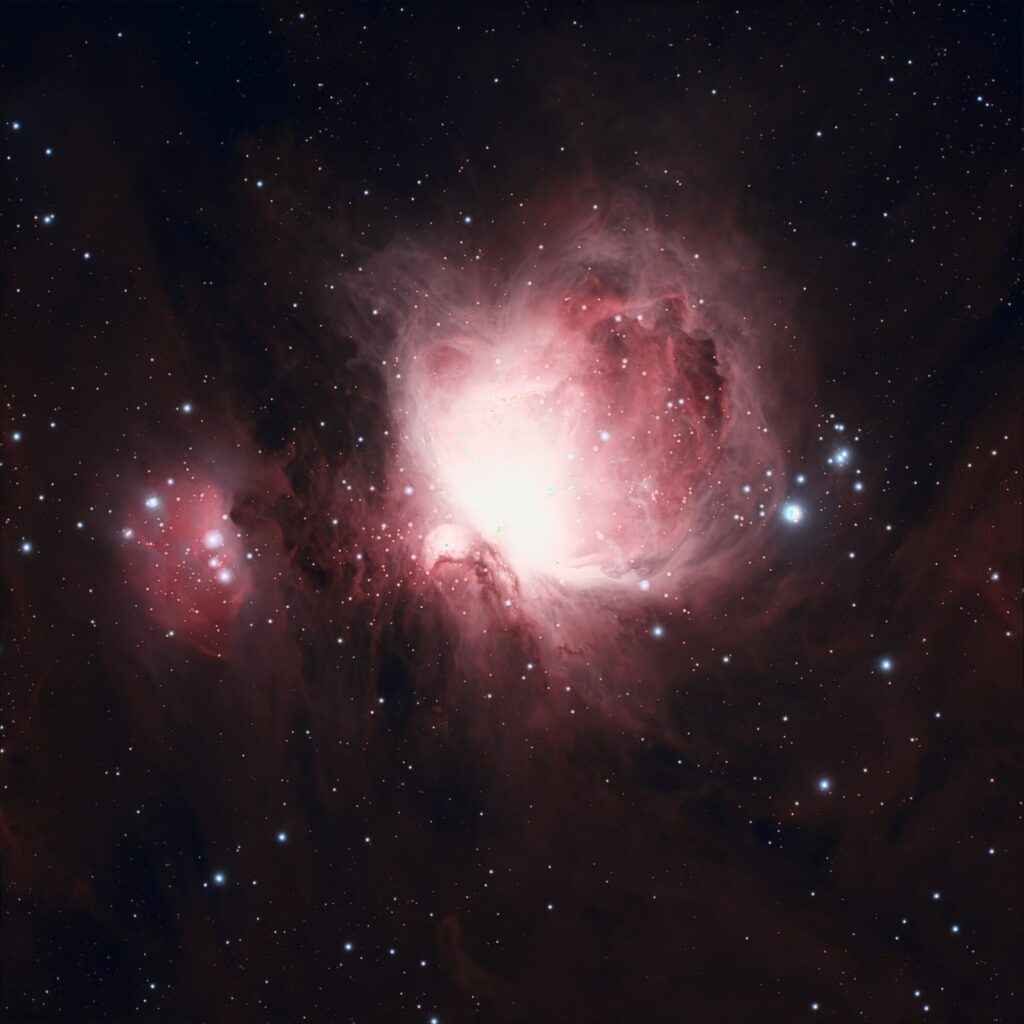
    The Orion Nebula (also known as Messier 42M42, or NGC 1976) is a diffuse nebula in the Milky Way situated south of Orion’s Belt in the constellation of Orion,[b] and is known as the middle “star” in the “sword” of Orion. It is one of the brightest nebulae and is visible to the naked eye in the night sky with an apparent magnitude of 4.0. It is 1,267.0 ± 5.4 light-years (388.5 ± 1.7 pc) away and is the closest region of massive star formation to Earth. M42 is estimated to be 25 light-years across (so its apparent size from Earth is approximately 1 degree). It has a mass of about 2,000 times that of the Sun. Older texts frequently refer to the Orion Nebula as the Great Nebula in Orion or the Great Orion Nebula.

    The Orion Nebula is one of the most scrutinized and photographed objects in the night sky and is among the most intensely studied celestial features. The nebula has revealed much about the process of how stars and planetary systems are formed from collapsing clouds of gas and dust. Astronomers have directly observed protoplanetary disks and brown dwarfs within the nebula, intense and turbulent motions of the gas, and the photo-ionizing effects of massive nearby stars in the nebula.

  • M33

    M33-2 Pinwheel Galaxy

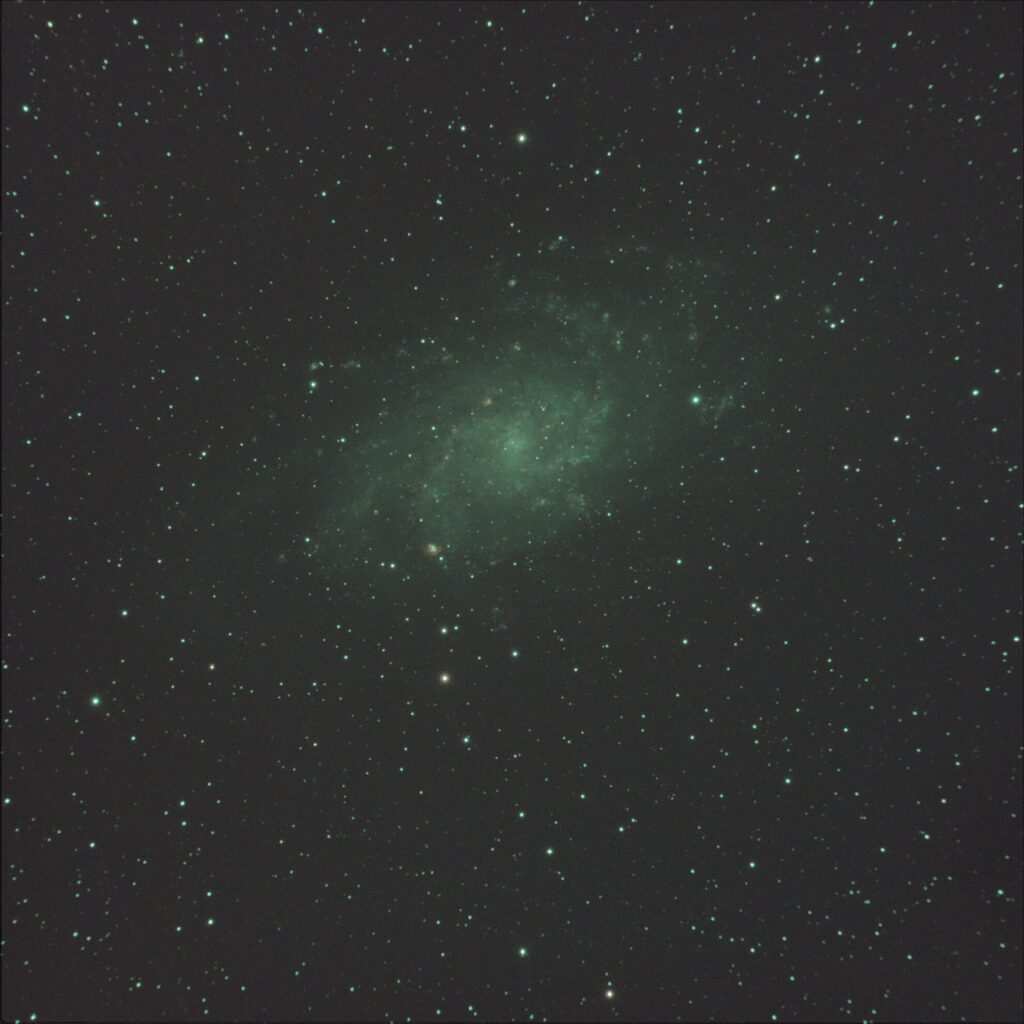
    The Triangulum Galaxy is a spiral galaxy 2.878 million light-years (ly) from Earth in the constellation Triangulum. It is catalogued as Messier 33 or NGC 598. With the D25 isophotal diameter of 18.74 kiloparsecs (61,100 light-years), the Triangulum Galaxy is the third-largest member of the Local Group of galaxies, behind the Andromeda Galaxy and the Milky Way.

    The galaxy is the second-smallest spiral galaxy in the Local Group after the Large Magellanic Cloud, which is a Magellanic-type spiral galaxy. It is believed to be a satellite of the Andromeda Galaxy or on its rebound into the latter due to their interactions, velocities, and proximity to one another in the night sky. It also has an H II nucleus.

  • M31

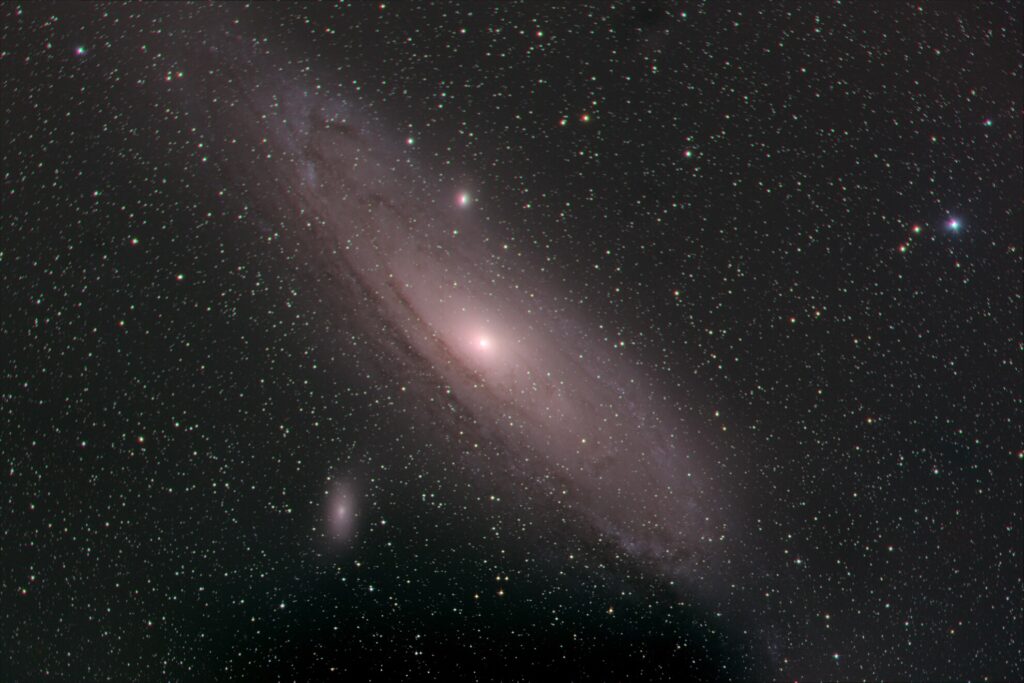
    The Andromeda Galaxy is a barred spiral galaxy and is the nearest major galaxy to the Milky Way. It was originally named the Andromeda Nebula and is cataloged as Messier 31M31, and NGC 224. Andromeda has a D25 isophotal diameter of about 46.56 kiloparsecs (152,000 light-years) and is approximately 765 kpc (2.5 million light-years) from Earth. The galaxy’s name stems from the area of Earth’s sky in which it appears, the constellation of Andromeda, which itself is named after the princess who was the wife of Perseus in Greek mythology.

    The virial mass of the Andromeda Galaxy is of the same order of magnitude as that of the Milky Way, at 1 trillion solar masses (2.0×1042 kilograms). The mass of either galaxy is difficult to estimate with any accuracy, but it was long thought that the Andromeda Galaxy was more massive than the Milky Way by a margin of some 25% to 50%. However, this has been called into question by early-21st-century studies indicating a possibly lower mass for the Andromeda Galaxy and a higher mass for the Milky Way. The Andromeda Galaxy has a diameter of about 46.56 kpc (152,000 ly), making it the largest member of the Local Group of galaxies in terms of extension.

    The Milky Way and Andromeda galaxies have about a 50% chance of colliding with each other in the next 10 billion years, merging to potentially form a giant elliptical galaxy or a large lenticular galaxy.

    With an apparent magnitude of 3.4, the Andromeda Galaxy is among the brightest of the Messier objects, and is visible to the naked eye from Earth on moonless nights, even when viewed from areas with moderate light pollution.

  • M27-2

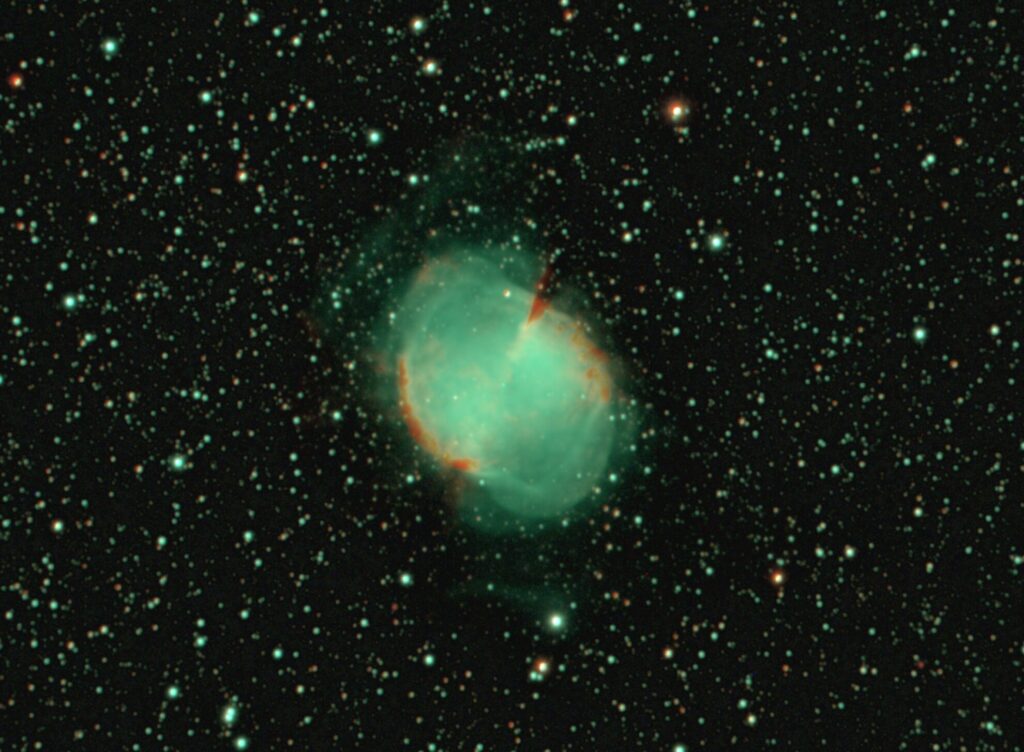
    The Dumbbell Nebula (also known as the Apple Core NebulaMessier 27, and NGC 6853) is a planetary nebula (nebulosity surrounding a white dwarf) in the constellation Vulpecula, at a distance of about 1360 light-years. It was the first such nebula to be discovered, by Charles Messier in 1764. At its brightness of visual magnitude 7.5 and diameter of about 8 arcminutes, it is easily visible in binoculars and is a popular observing target in amateur telescopes.

    The Dumbbell Nebula appears shaped like a prolate spheroid and is viewed from our perspective along the plane of its equator. In 1992, Moreno-Corral et al. computed that its rate of expansion angularly was, viewed from our distance, no more than 2.3 arcseconds (″) per century. From this, an upper limit to the age of 14,600 years may be determined. In 1970, Bohuski, Smith, and Weedman found an expansion velocity of 31 km/s. Given its semi-minor axis radius of 1.01 ly, this implies that the kinematic age of the nebula is 9,800 years.

    Like many nearby planetary nebulae, the Dumbbell contains knots. Its central region is marked by a pattern of dark and bright cusped knots and their associated dark tails (see picture). The knots vary in appearance from symmetric objects with tails to rather irregular tail-less objects. Similarly to the Helix Nebula and the Eskimo Nebula, the heads of the knots have bright cusps which are local photoionization fronts.

    The central star, a white dwarf progenitor, is estimated to have a radius which is 0.055±0.02 R (0.13 light seconds) which gives it a size larger than most other known white dwarfs. Its mass was estimated in 1999 by Napiwotzki to be 0.56±0.01 M.